Dug out properly
Excavated and built up, never laid on top of the lawn.
 Book Now
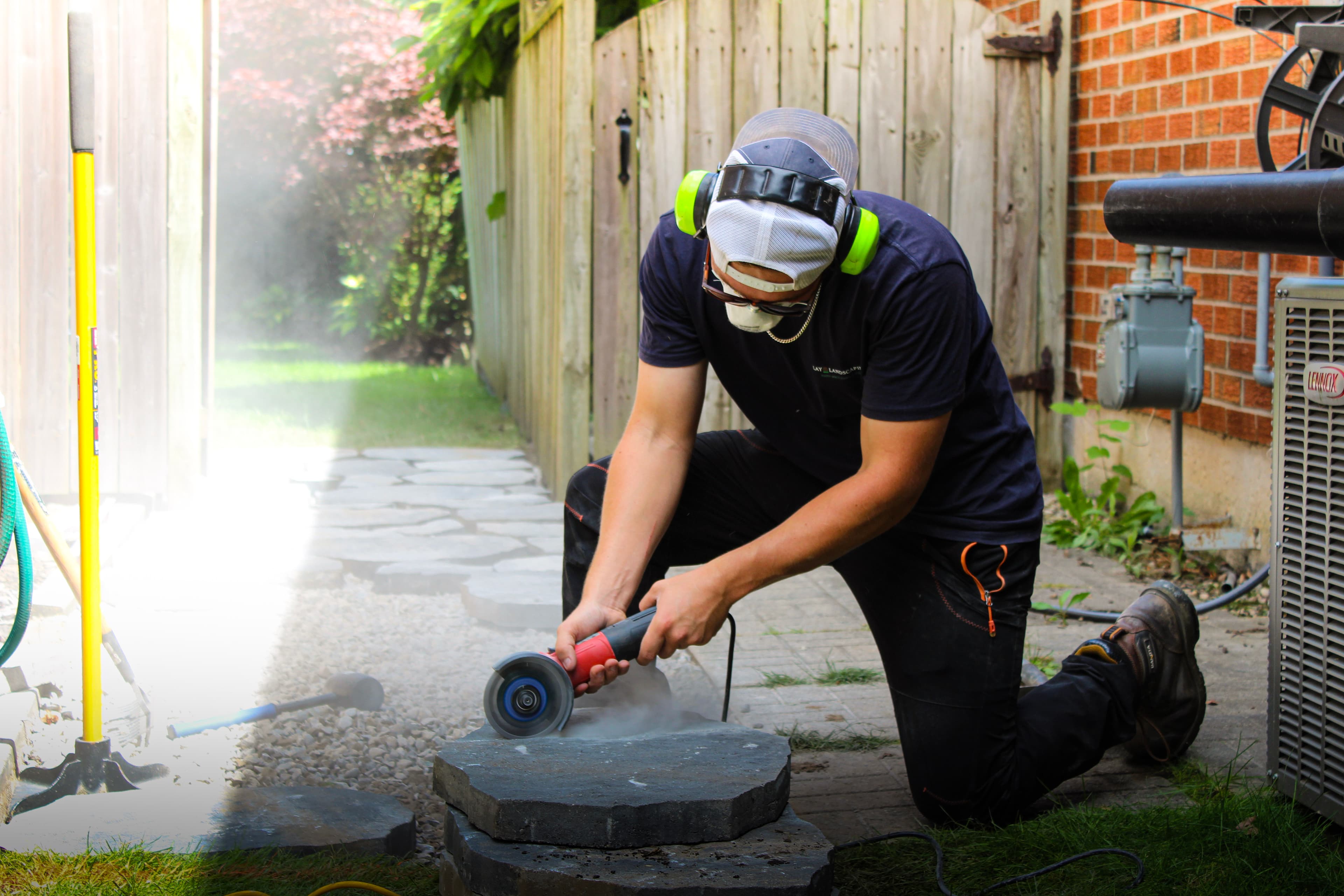
Flagstone, natural stone and gravel walkways built on a proper base, with clean lines that tie your yard together.
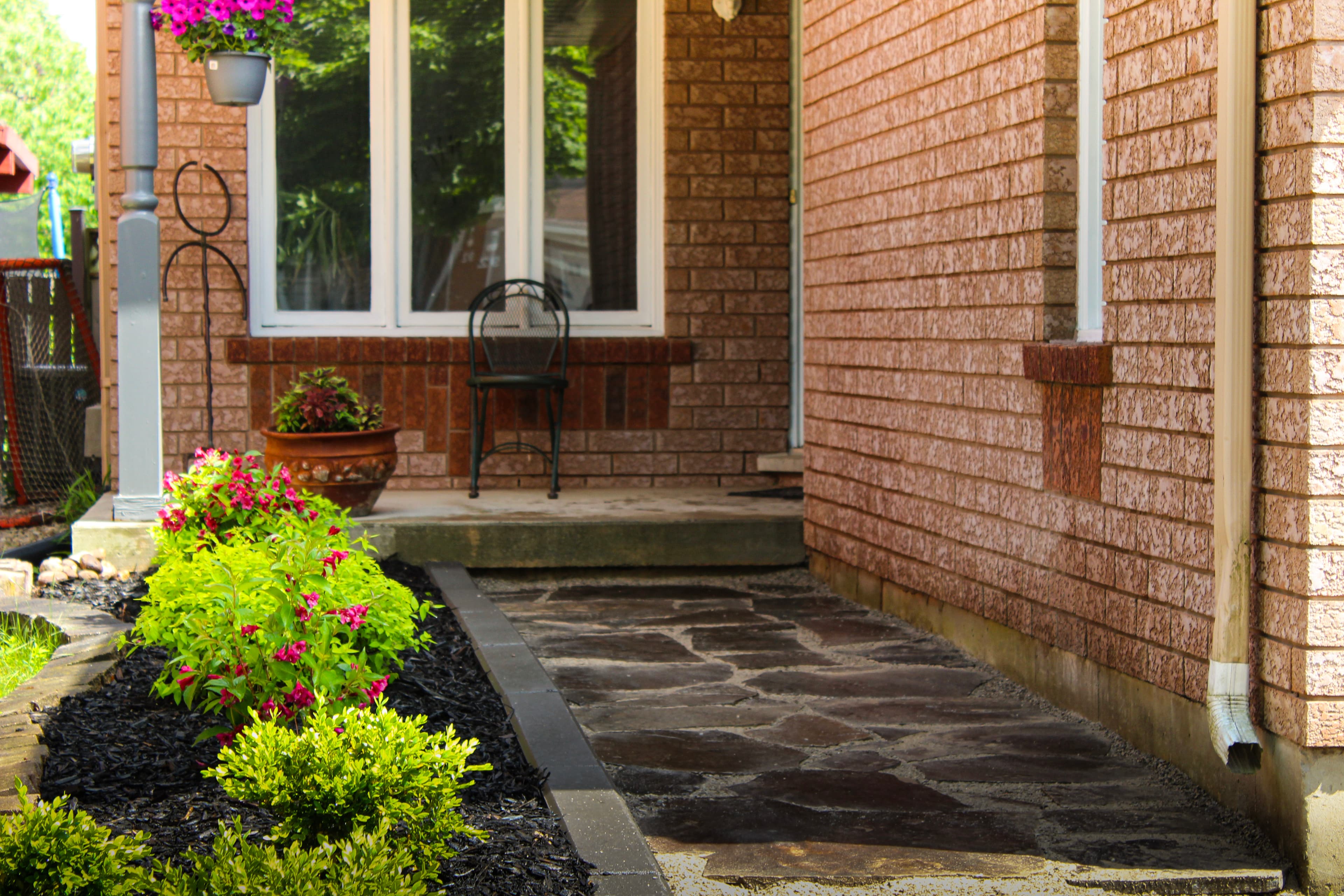
Pathway Installation in Cambridge, Ontario
Flagstone, natural stone and gravel, built on a base that drains.
Lay Landscaping installs flagstone, natural stone and gravel pathways for homes across Cambridge, Kitchener, Waterloo and Guelph. Each path is built on an excavated, compacted base so it stays level through Ontario's freeze-thaw cycles, with stone cut to fit and clean edges where the path meets your lawn and garden beds.
Excavated and built up, never laid on top of the lawn.
Each stone shaped by hand to suit the path.
Utilities marked before a shovel goes in.
A path that heaves, sinks or rocks underfoot almost always failed below the surface. Here, the ground freezes and thaws many times each winter, and any water trapped under a path expands and pushes the stone out of place. A properly excavated, compacted gravel base drains that water away and gives the stone something solid to sit on.
We dig out the path, build and compact the base, then set the stone. It takes longer than laying stone on the lawn, and it's why the path still sits level years later.
Flagstone and natural stone suit garden settings, side yards and the route to a back gate, and each piece is cut and fitted to the shape of the path.
Gravel and crushed stone cost less, drain freely and work well for longer runs and informal walkways. We'll show you how each one looks and wears, and what it means for the budget.
A path looks best when the bed edges follow its line and the lawn meets it cleanly. Pathway work pairs well with new garden beds, mulch or river rock, so the whole area gets finished at once.
Ontario Dig Authority (formerly Ontario One Call) locates are free and must be requested at least five business days before digging. They're valid for 60 days.
Anything within one metre of a marked utility line has to be dug by hand, which can affect how a path is built near gas or hydro lines.
Waterloo Region winters bring heavy snow and repeated freeze-thaw, so base depth and drainage matter more here than in milder places.
If your property backs onto the Grand River, the Speed River or another regulated area, you may need a Grand River Conservation Authority permit before grading or adding fill. The GRCA's free Map Your Property tool shows whether it applies.
Sources: Ontario Dig Authority (formerly Ontario One Call) · City of Waterloo: Call before you dig, utility locate rules · Grand River Conservation Authority: Map Your Property. Last updated November 2026.
Our Process
From the first conversation to the final walkthrough, we keep every step clear and easy to follow.
We lay out the path's line, width and material with you.
Utilities are located, then we excavate the path.
The gravel base is laid, levelled and compacted.
Stone is cut and set, joints filled and edges finished.
Questions
Something else on your mind? Call (519) 240-8951 or send us a message.
Cost depends mainly on the length and width of the path, the material (flagstone and natural stone cost more than gravel), how much excavation is needed and access to the yard. We give a free quote after seeing the route.
Flagstone is more formal and very durable when it's set on a proper base. Gravel costs less, drains freely and suits long or informal paths, but it needs occasional raking and topping up. We'll recommend what fits the space and how you'll use it.
Yes. Ontario law requires a locate through Ontario Dig Authority (formerly Ontario One Call) before any digging. It's free, and the request needs to go in at least five business days ahead.
A path laid straight onto soil often will. An excavated, compacted and free-draining base is the best protection against frost heave, which is why we build our paths that way.
Related services
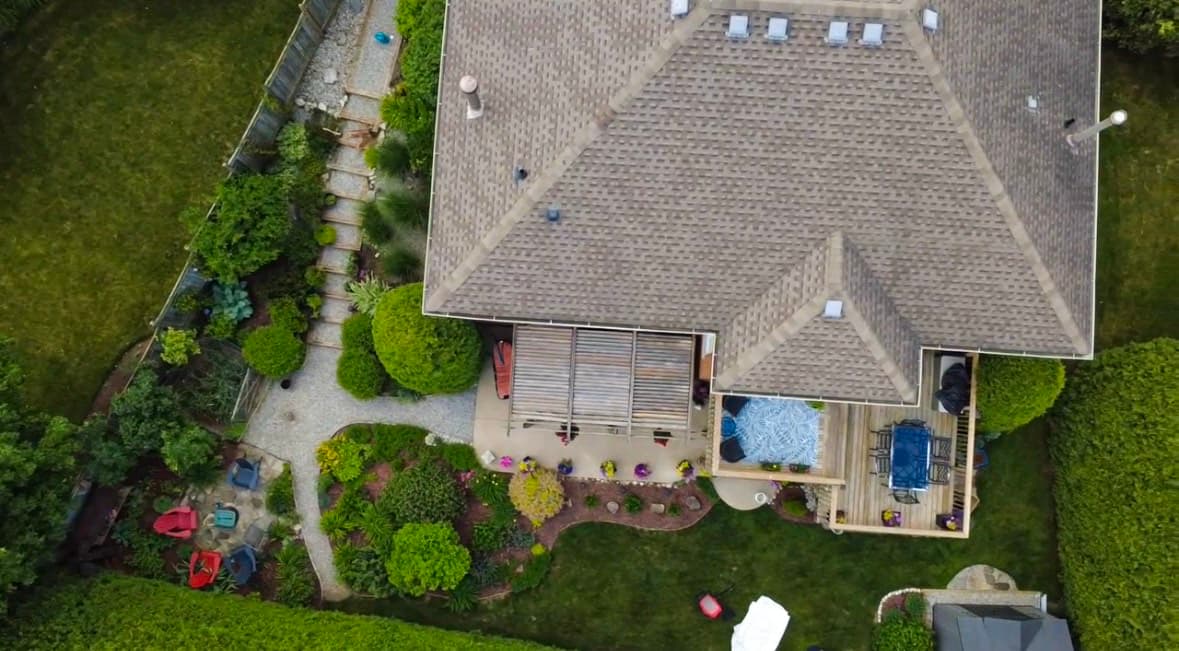
Planting beds and garden layouts designed, installed and cared for through every season.
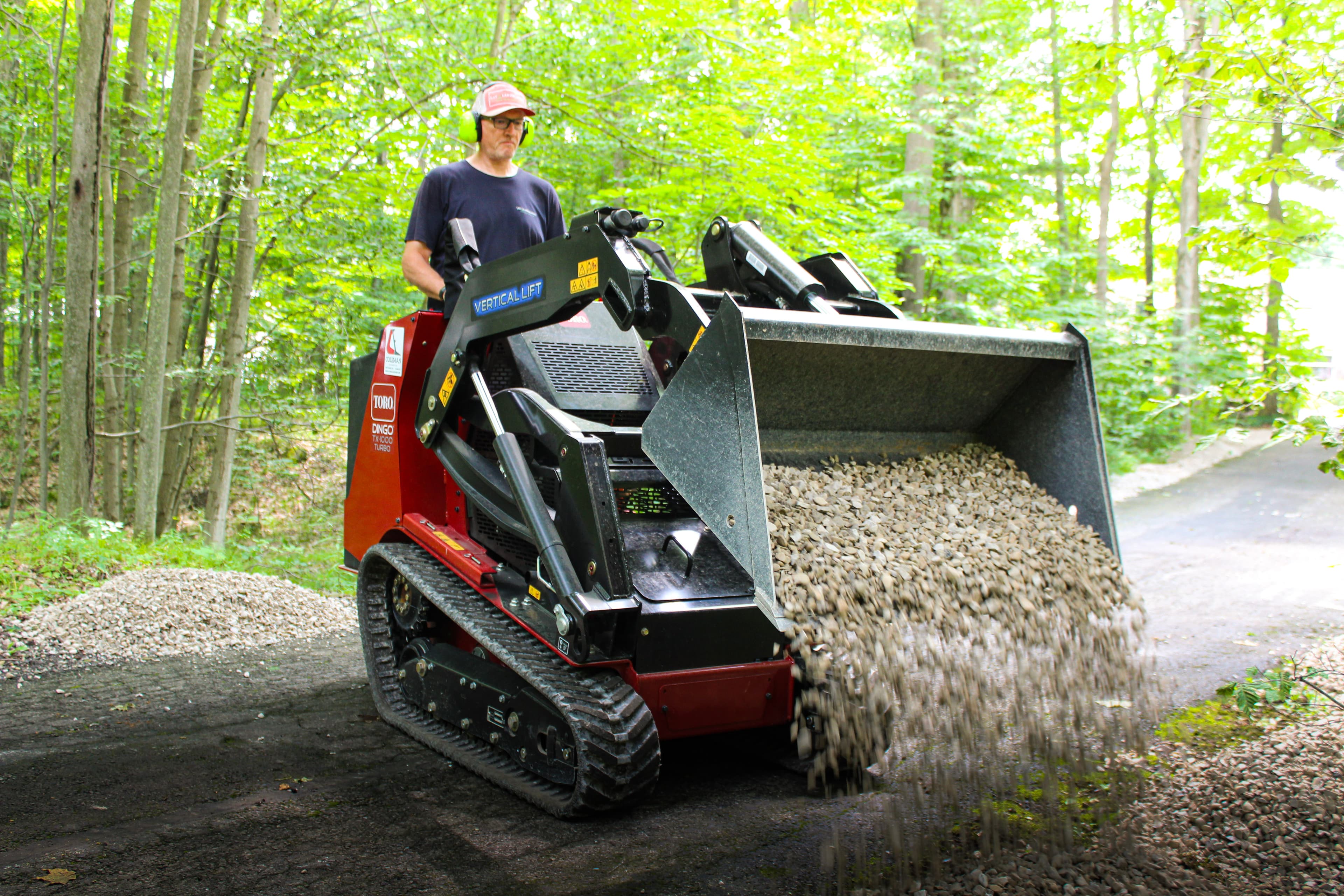
Fresh, durable ground cover installed with clean lines and proper prep.
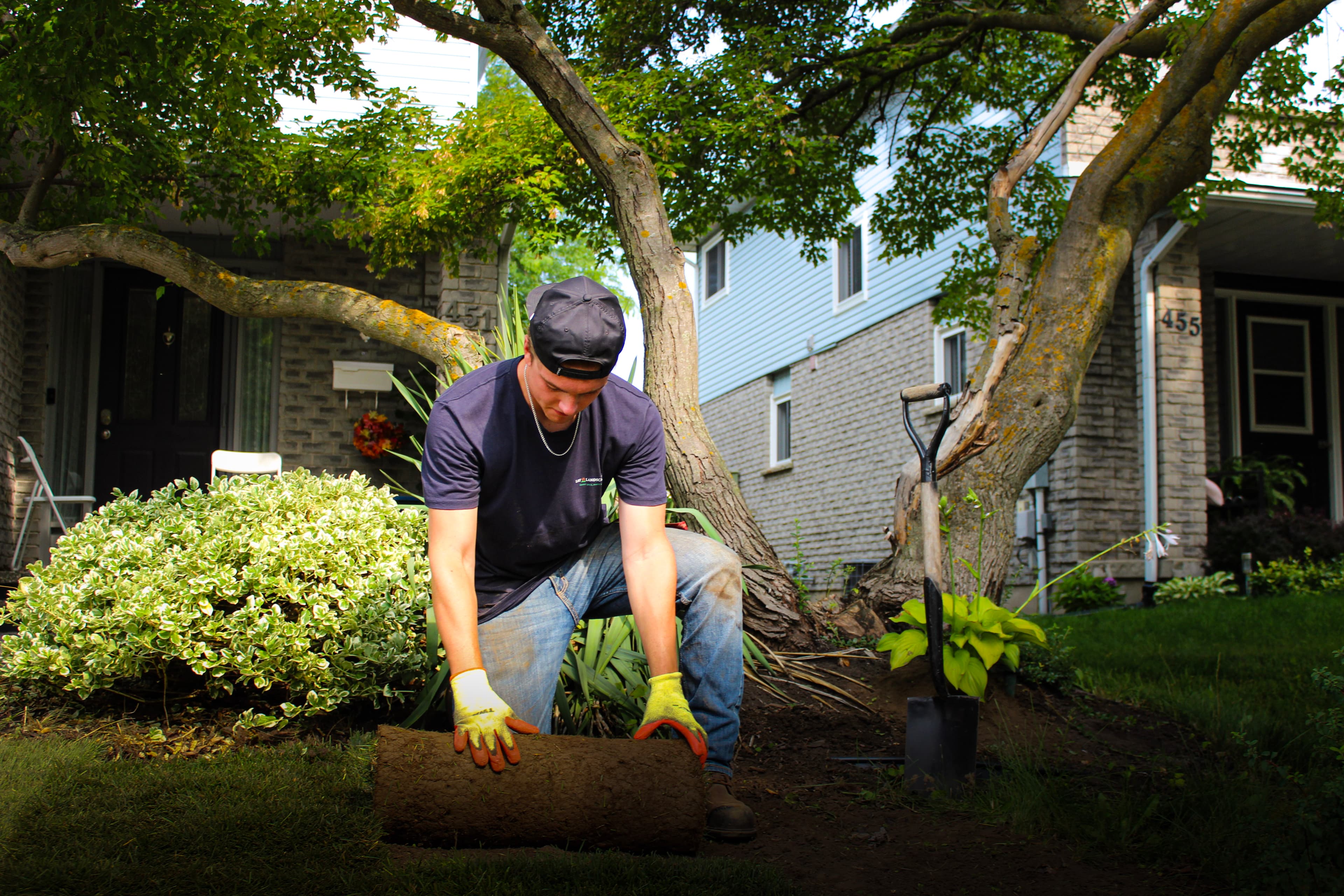
Fresh sod installed with proper grading, prep, and watering guidance.
Have a project in mind?
Tell us what you're looking for and we'll help you figure out the right next step for your property.
Book Now